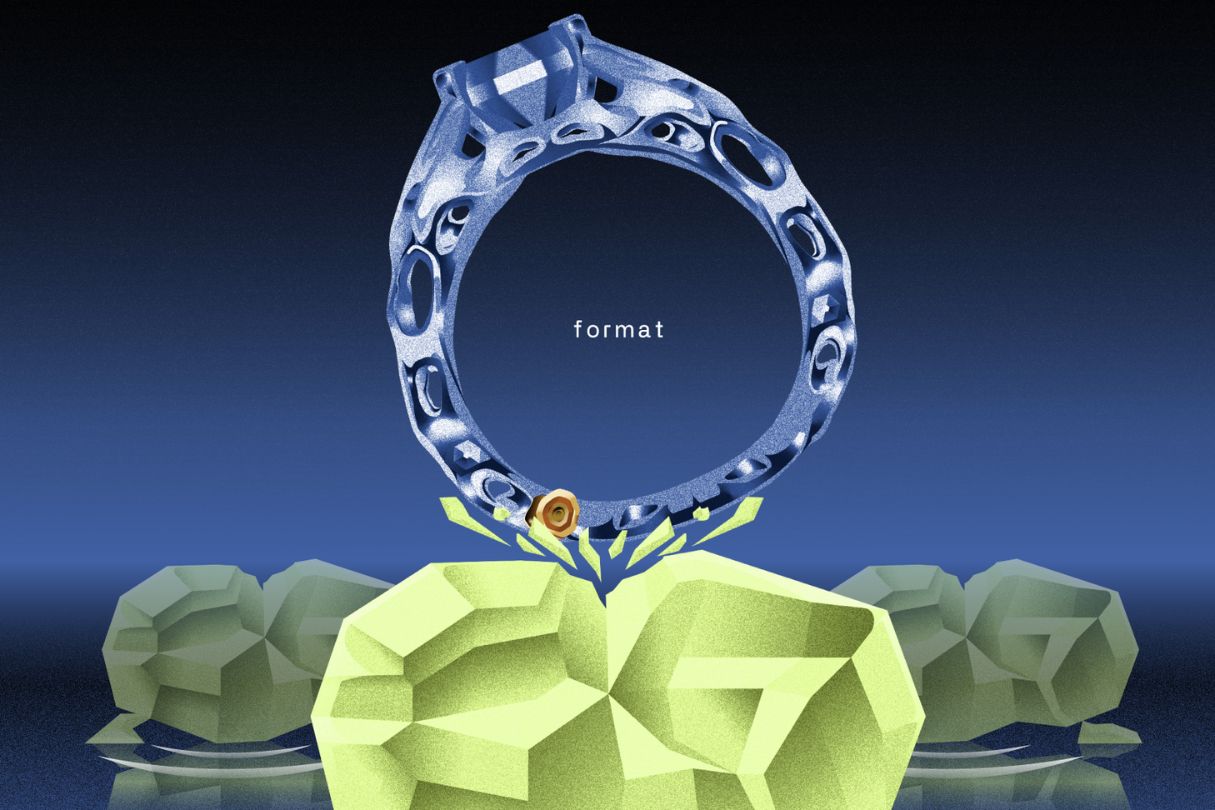
STILL, IT REMAINS.
What The Form × BURR at Digital Jewelry Week 2026, Milan
Jewelry is changing.
For a long time, the category was dominated by familiar ideas of luxury, status, preciousness, and perfection. But the current movement in contemporary jewelry is expanding that definition. Independent designers are bringing sculpture, architecture, material experimentation, personal identity, and cultural references into objects made to be worn. In 2026, this shift is especially visible in the return of sculptural forms, artisanal processes, historical references, and more individual approaches to design moving away from uniform, algorithm driven aesthetics toward pieces with stronger character and authorship.

Digital Jewelry Week exists within this changing landscape. Its 2026 edition brings together brands, designers, and students from 29 countries, presenting jewelry through navigable 3D experiences alongside live programming in Milan. The main event at Galleria Glauco Cavaciuti creates a physical meeting point for designers, press, collectors, and the wider jewelry community. The platform reflects an industry that is no longer separating physical craftsmanship from digital presentation the object and the story surrounding it increasingly exist together.
For What The Form, entering this space is a natural continuation of its purpose as an experimental platform. What The Form has always been interested in moving between disciplines rather than remaining inside a fixed creative category. Jewelry becomes another territory to explore: a small object capable of carrying design, craft, memory, cultural references, technology, and identity at the same time.
This movement brought What The Form together with BURR, an emerging artisan jewelry label whose foundation is built around refinement rather than decoration. BURR takes its philosophy from the burr tool itself a precision instrument used to carve, shape, and define metal. That process of removing excess to reveal form becomes more than a production technique; it becomes the way the brand thinks about design. Quality, craftsmanship, and intentionality sit at the centre of its long-term vision.
BURR also represents another movement within the industry: the possibility for a Southeast Asian design perspective to participate in the international jewelry conversation without imitating the established language of European luxury. Its ambition is global, but its value is rooted in skilled craftsmanship, cultural depth, material honesty, and a design language that is raw, sculptural, architectural, and deliberately distinctive. The goal is not simply to create another jewelry label, but to build a recognizable design identity capable of travelling beyond Indonesia.
Digital Jewelry Week becomes an important step in that journey.
Rather than waiting for international recognition to arrive locally, What The Form and BURR move toward the ecosystem where the conversation is already happening—bringing an Indonesian creative collaboration into Milan and placing it alongside designers and brands from around the world. In that sense, the exhibition is not only a presentation of a ring. It is also a first test of how the ideas, craftsmanship, and visual language developed here can exist within a broader international context.
The collaboration begins with a tension familiar to contemporary culture:
Everything moves. Very little remains.
Trends appear and disappear almost instantly. Images are consumed faster than objects can develop meaning. Products are continuously replaced by the next release, and craftsmanship can become secondary to the speed at which something needs to be seen. Jewelry, despite its historical relationship with memory, inheritance, and permanence, has also become part of this accelerated visual cycle.
From this tension came Still, It Remains.
The collaboration does not attempt to reject technology, contemporary culture, or the speed of the present. Instead, it asks whether a pause can still exist within them. What happens when an object is made through a slower rhythm through hand, pressure, repetition, material, and attention and then placed inside a digital environment built for immediate access?
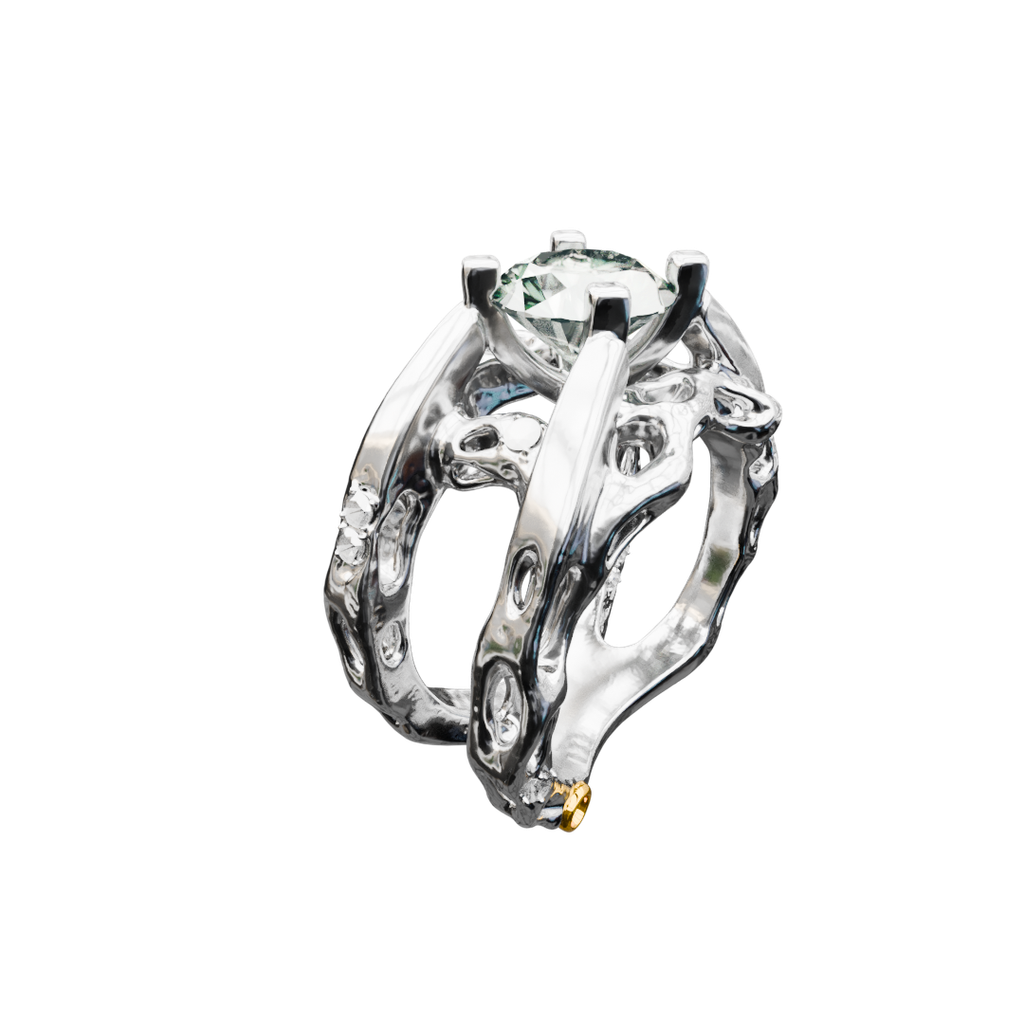
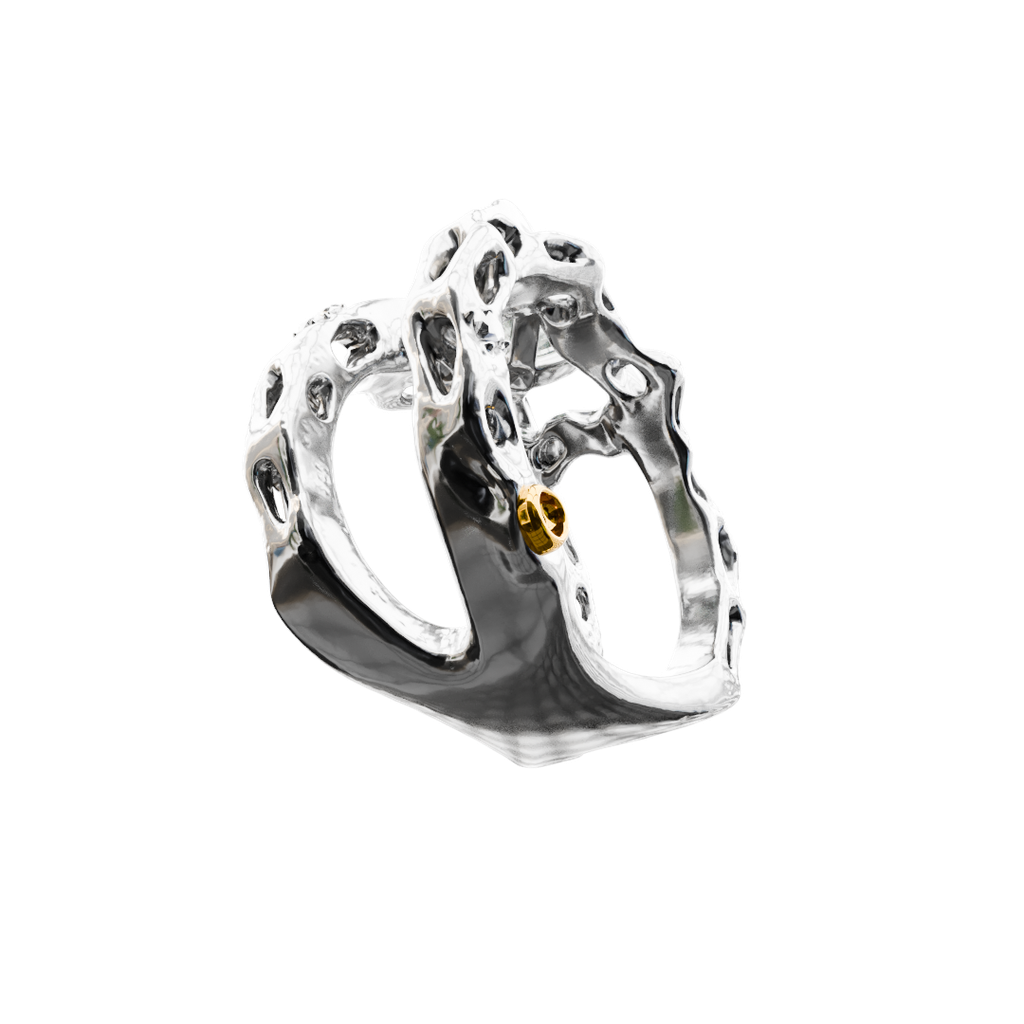
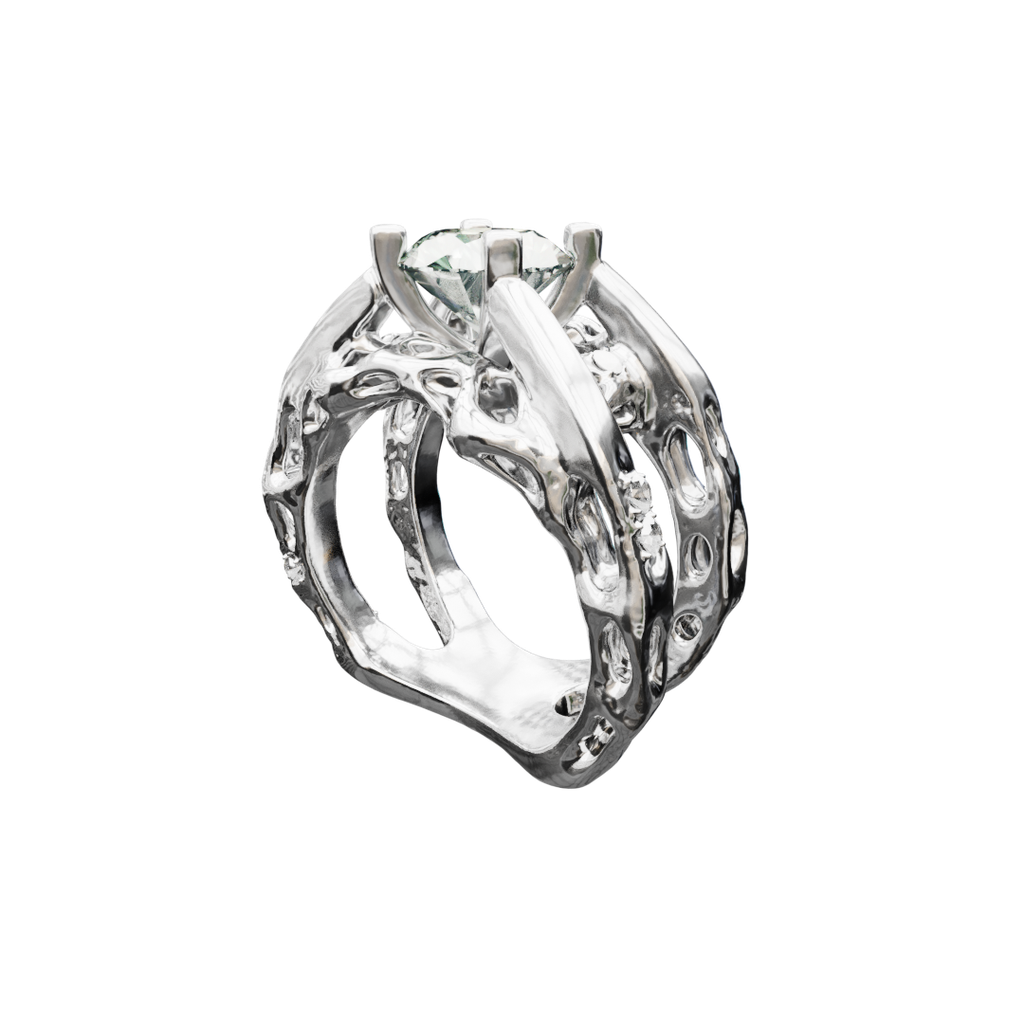
The answer became REMNANT.
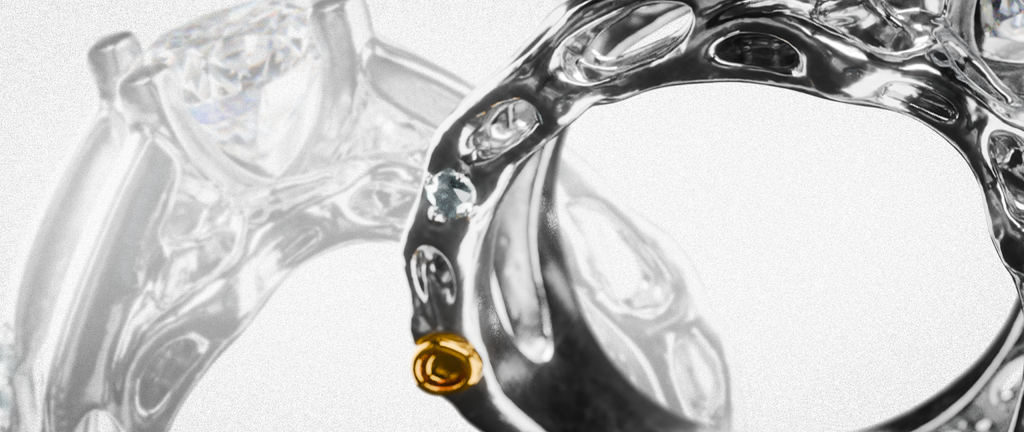
Designed by Hakim of BURR, REMNANT translates the conceptual framework of Still, It Remains. into a physical object. What The Form developed the narrative and creative framework surrounding the collaboration, while Hakim retained authorship over the jewelry itself its silhouette, structure, stone, engraving, material decisions, and final construction.
The piece was developed around five principles: a sense of time, a sense of weight, a trace of the hand, a form that resists immediate reading, and quiet memorability. Its open structures and irregular cavities allow absence to become part of the composition. Polished surfaces sit beside forms that feel eroded or organically carved. The ring does not reveal itself immediately; it asks to be observed from different angles and over time.
That is also where the value of REMNANT sits.
It is not defined only by the preciousness of its material or the visibility of its stone. Its value is carried by the decisions behind the object: the process, structural thinking, evidence of the hand, and the idea that jewelry can hold meaning beyond its decorative function.
This is increasingly relevant in an industry where cultural relevance and experience are becoming as important as product alone. Contemporary jewelry brands are using exhibitions, digital storytelling, collaborations, and cultural platforms to build worlds around their objects, while independent designers are gaining visibility by developing distinct points of view rather than simply following established luxury codes.
For What The Form and BURR, Milan is therefore not treated as an ending.
Still, It Remains. is the first chapter of that movement.
And REMNANT is the object that carries it forward.